

01 The Micro Perspective
Generating big data on marine particles using event-based vision sensors (EVS)
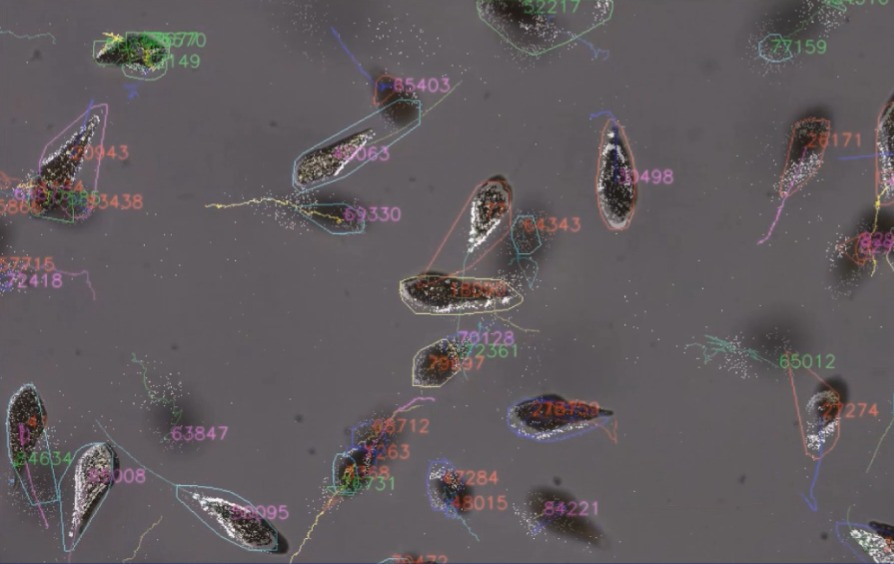
Using event-based vision sensors (EVS) developed for industrial applications, the system rapidly captures and analyzes “marine particles”—such as plankton and sedimentary aggregates (marine snow)—which are fundamental components supporting marine ecosystems.Based on the analysis results, the system generates data with new value that contributes to environmental impact assessments related to marine development, the sustainable use of fishery resources, biodiversity conservation, and climate change research.
01 — Overview
Overview of the Initiative
In this project, we are working to establish a new technological foundation that utilizes EVS to directly and rapidly observe and analyze the movements of underwater particles and microorganisms—phenomena that have been difficult to capture until now.In addition to conventional observations focused on concentration and abundance, by capturing “what is moving and how,” we are deepening our understanding of the marine environment and ecosystems, while also advancing applications in areas such as improving safety in the marine industry, conducting environmental impact assessments, and researching climate change.Furthermore, by developing a platform to analyze, store, and share the acquired data, we aim to realize a new marine observation infrastructure that can be widely utilized across a broad spectrum, from research to industrial applications.
Key Results in FY2025
- Environmental Impact Assessment for Seabed Resource Development — We participated in seafloor mobility tests of a manganese nodule harvester conducted by the Japan Oil, Gas and Metals National Corporation (JOGMEC) and Marine Resources Development Co., Ltd. (DORD), and conducted field observations of the plume generated by the harvester and the biological response.
- Initiatives to Address Climate Change — We participated in the research project “Environmental Changes in the Southern Ocean around East Antarctica and the Responses of Biogeochemical Cycles and Lower-Tiers Ecosystems,” led by Professor Naomi Harada of the University of Tokyo, and installed a moored instrument to conduct long-term observations over the course of one year.
- Research Presentation — We presented our research findings at nine academic conferences and international meetings, including the Underwater Minerals Conference 2025 and the Ocean Sciences Meeting 2026.
Future Outlook
We aim to build a platform that integrates functionality for analyzing data on plankton and aggregates online with a database for storing and sharing the analyzed data.